How to Rank in the Google Map Pack With Reviews
Learn how to rank in the Google map pack with reviews, a complete profile, and a steady review habit, the honest way with no shortcuts.
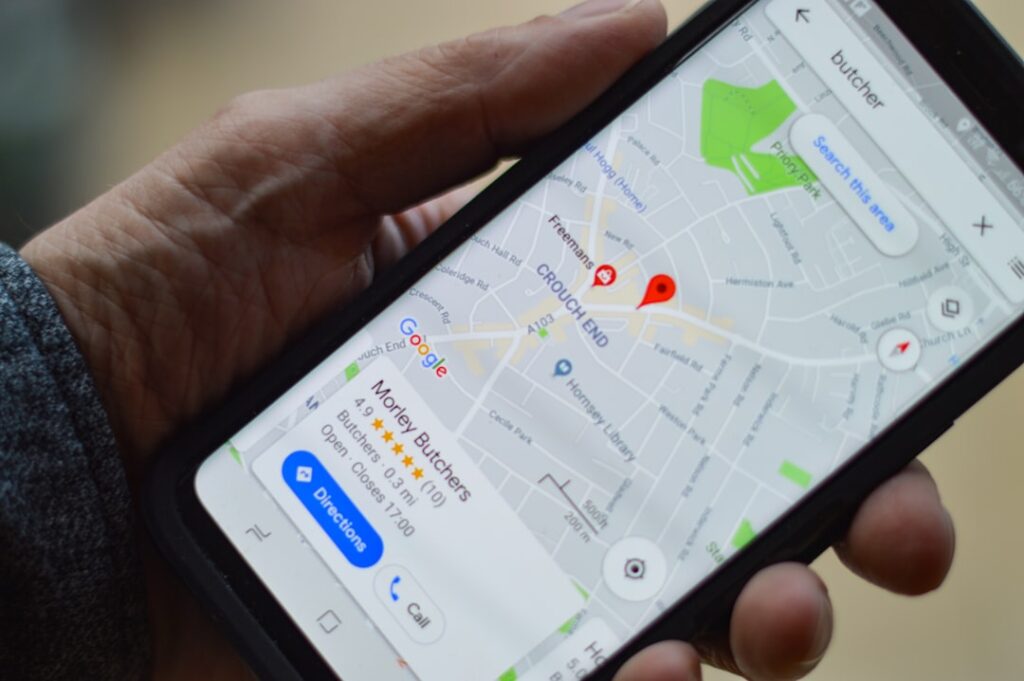
Reviews are one of the strongest levers you can pull for the Google Map Pack, and they are still not the biggest. In Whitespark’s 2026 Local Search Ranking Factors survey, review signals form the second-largest factor group — but individually your rating sits at #6, review quantity at #9, and review recency at #11, all of them below your primary Business Profile category, the searcher’s proximity, and keywords in your business name.
That is the honest frame, and it explains the thing that drives owners mad: the competitor with half your reviews who has been sitting above you for eight months. This guide covers what actually decides the local three-pack, where reviews really fit, and the collection habit that supports a top-three spot without breaking Google’s policy or federal law.
How Google decides who shows in the Map Pack
Google publishes its own model, and it is short. Local results are “mainly based on relevance, distance, and popularity.”
- Relevance — how well your profile matches what was searched. Your primary category does most of this work.
- Distance — how far you are from the searcher or the place they named. You cannot influence this without moving.
- Prominence — how well known the business is. Google says this is “based on info like how many websites link to your business and how many reviews you have,” and states directly that “more reviews and positive ratings can help your business’s local ranking.”
Reviews live inside prominence. They are one input into one of three pillars — which is exactly why a review push alone rarely moves a listing that is losing on category or distance.
Worth quoting one more line from the same page, because it is the answer to every agency cold call promising a guaranteed spot: “There’s no way to request or pay for a better local ranking on Google.”
Where reviews actually rank among the factors
Whitespark surveys local SEO practitioners each year and publishes a ranked list. From the 2026 edition, the top factors and where the review signals land:
| Rank | Factor |
|---|---|
| 1 | Primary Google Business Profile category |
| 2 | Proximity to the point of search |
| 3 | Keywords in the business title |
| 4 | Physical address in the city being searched |
| 5 | Business open at the time of the search |
| 6 | High numerical ratings (4–5 stars) |
| 9 | Quantity of native Google reviews |
| 11 | Review recency |
| 14 | Sustained review influx (velocity) |
| 36 | Keywords used in native reviews |
Read as a group rather than as individual lines, review signals have grown: practitioner reads of the survey put them at roughly a sixth of local pack influence in 2023 and about a fifth in 2026, second only to Business Profile signals themselves.
Two conclusions follow, and they sound contradictory until you hold both. Reviews matter more than they used to. And if your category is wrong or you are three miles further from the searcher than the incumbent, no volume of reviews fixes that.
Why a competitor with fewer reviews outranks you
This is the most common complaint in local SEO forums, and there is usually a boring explanation rather than a mystery.
- Their business name contains the keyword. Keywords in the business title are the third-strongest factor in the survey. It is also the factor most often abused, and it is why a one-review business can appear above a twelve-year-old firm with 140 reviews.
- They are closer. Proximity is factor two. Owners routinely discover their listing appears from a nearby postcode and vanishes from their own — set your test location deliberately before concluding anything.
- Their category is more precise. “Plumber” and “Drainage service” are different queries to Google.
- Their reviews are newer. Covered below — this is the part you can act on.
Before starting a review campaign, check those first three. Reviews are the lever you own, but they cannot compensate for a wrong primary category.
Recency and velocity beat a big old pile
The clearest shift in the last two years: a steady flow of recent reviews does more than a large historical total. Review recency and sustained influx both appear as their own factors in the survey, and practitioners describe the same effect — a business with twenty reviews from the last three months tends to outperform one with a hundred from three years ago.
Pace matters more than bursts, too. The commonly-repeated practitioner guidance is that two or three reviews a week beats fifty in one month followed by silence — a spike looks unnatural and the quiet period afterwards reads as a business that stopped serving customers.
You will also see correlations quoted, such as businesses with 100+ reviews ranking substantially better. Treat those as correlations, which is all they are: businesses that collect a lot of reviews tend to be businesses that do a lot of things well. The mechanism to copy is the habit, not the number. There is more on setting a realistic target in How Many Google Reviews Do You Need? Understanding Review Velocity.
What your customers demand from the same numbers
Ranking is only half the job — the pack shows three results and the searcher still has to pick one. BrightLocal’s 2026 Local Consumer Review Survey, of just over a thousand US adults, sets the bar:
- 97% read reviews for local businesses, and Google is the leading source at 71%.
- 47% will not use a business with fewer than twenty reviews.
- 74% look for reviews written in the last three months, and 32% want them from the last fortnight — up from 20% the year before.
- 68% require at least four stars, and 31% will only use a business rated 4.5 or better — nearly double the 17% who said so in 2025.
Notice how neatly consumer expectation and ranking signal have converged on the same thing. Recent reviews satisfy both. A twenty-review floor and a 4.5-star bar are now customer requirements, not just algorithm inputs.
The review habit that supports a top-three spot
- Fix the basics first. Correct primary category, address in the city you serve, accurate opening hours — factors one, four and five. See Set Up Your Google Business Profile to Win Reviews.
- Benchmark the pace of the current top three. Look at when their most recent reviews landed, not how many they have in total. That pace is your target.
- Ask every customer, every time. An automatic trigger — job finished, order delivered — removes the decision about who to ask, which is what keeps the flow steady and keeps you compliant.
- Make the path one tap. Direct review link in the follow-up message, on the receipt, on a card. Every extra step loses people who intended to write something.
- Reply to all of them. Responses are visible to the next reader, and dealing with a complaint in public is the single most persuasive thing on your profile.
- Let customers write in their own words. Keywords in review text are a real signal, though a distant one at #36 — never script or suggest them. Do Keywords in Reviews Help Your Local SEO? covers what is fair game.
- Watch the pace monthly, not the rank daily. Map Pack positions fluctuate by query and by the searcher’s location. Your review flow is the input you control.
The shortcuts that end badly
Every one of these circulates as local SEO advice. All three are prohibited.
- Buying reviews. The FTC’s rule on consumer reviews, in force since October 2024, makes writing, buying or selling fake reviews an unfair or deceptive practice, with civil penalty exposure per violation. Google removes them when it finds them.
- Incentives. Google prohibits offering anything of value in exchange for a review outright, and the FTC rule reaches rewards conditioned on positive sentiment. “Whatever it takes” campaigns for staff review counts are exactly this.
- Gating. Showing the review link only to customers who rated you well breaks Google’s policy against selectively soliciting positive reviews. Businesses caught at it have lost the overwhelming majority of the reviews they collected — see Review Gating: Why It Breaks Google and FTC Rules.
The pattern is the same in each case: the shortcut buys a rating that does not survive contact with enforcement, and the reviews it produced disappear along with it.
FAQ
How many reviews do I need to rank in the Map Pack?
There is no threshold. The useful target is the pace of the businesses currently in the pack for your query, plus the consumer floor — nearly half of searchers skip a business with fewer than twenty reviews.
Do reviews affect Google Maps ranking at all?
Yes. Google states that more reviews and positive ratings can help local ranking, through prominence. They are one input among several, and they are the one that keeps moving after your profile is set up.
Why did my Map Pack position drop when nothing changed?
Local results vary by the searcher’s exact location and by query, so some of what looks like a drop is not one. Where it is real, the first things practitioners audit are review velocity and recency — a flow that quietly stopped a few months ago shows up later — followed by competitor changes and profile edits.
Can I pay Google to rank higher in the Map Pack?
No. Google’s own documentation says there is no way to request or pay for a better local ranking. Ads are a separate placement, not a ranking lever.
Is a perfect five-star rating the goal?
Not really. Practitioners consistently put the sweet spot between about 4.5 and 4.9, and an unbroken five reads as implausible to shoppers. A handful of honest lower ratings with good replies does more for conversion than a spotless wall.
Work the lever you actually own
You cannot move your premises closer to the searcher and you should not stuff keywords into your business name. What you can do is keep recent, genuine reviews arriving at a steady pace, from every customer rather than a chosen few — which happens to be what your customers are checking for as well.
Making that automatic is the whole job. Reviews Wall does it as a self-hosted WordPress plugin: every customer invited to review on Google after the work is done, a private channel alongside for anyone who wants to raise a problem first, and the results shown on your own site.
Sources
- Google Business Profile Help — Improve your local ranking on Google
- Whitespark — Local Search Ranking Factors 2026
- BrightLocal — Local Consumer Review Survey 2026
- Google Maps User-Generated-Content Policy — Prohibited & restricted content
- Federal Trade Commission — 16 CFR Part 465, Rule on the Use of Consumer Reviews and Testimonials
Share with AI
Pipe this article straight into ChatGPT.